The ATM Skimming Incident: How Cameras and Cloned Cards Led to Capture
We analyzed how a Florida man’s attempt to cash out cloned cards unraveled in 72 hours, exposing the limits of darknet anonymity and the power of ATM surveillance systems.
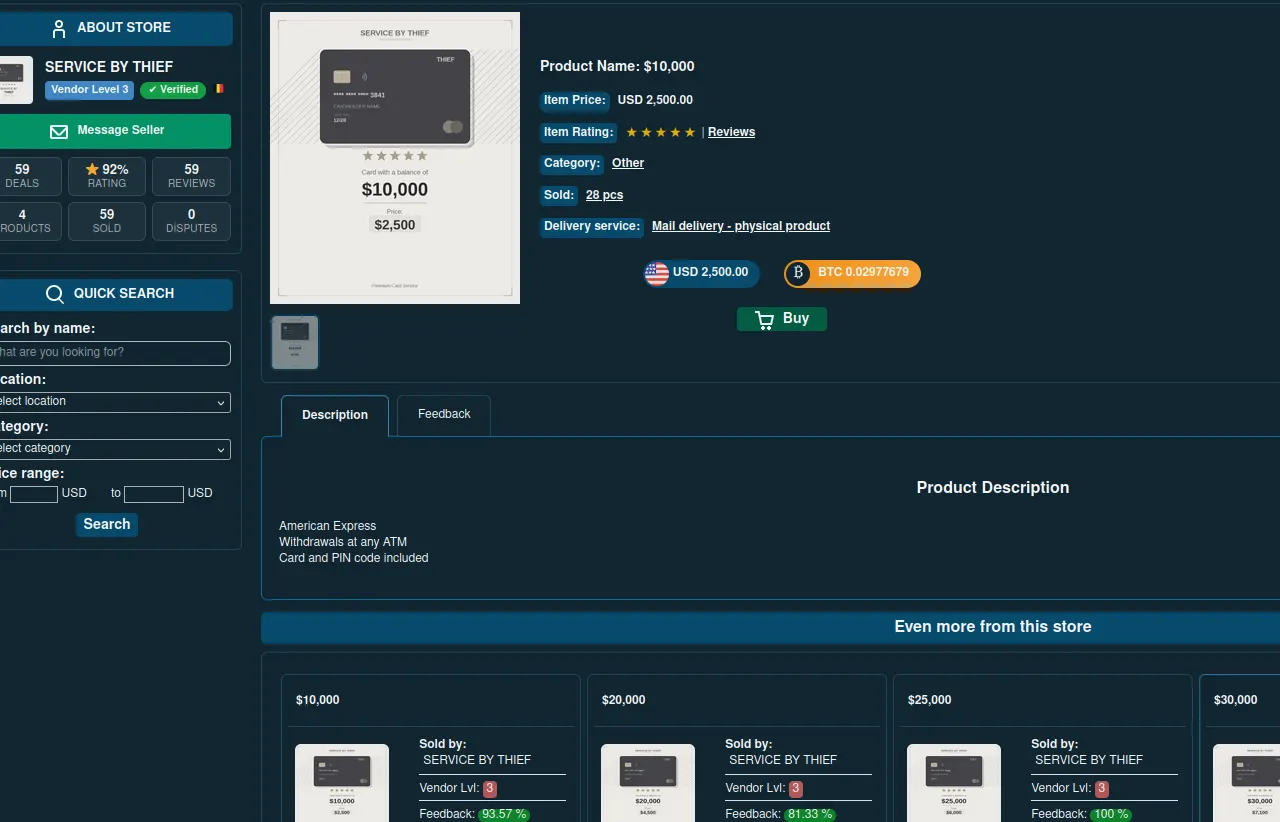
Mark T., a 34-year-old Tampa Bay resident, believed he had found an easy way to make money. In November 2024, he bought six cloned debit cards with PINs on a darknet marketplace for $480 in cryptocurrency. The cards, encoded with stolen magnetic tracks, worked flawlessly at three ATMs, netting him $4,200. But the fourth ATM became his downfall, setting off a chain of events that led to his arrest and a five-year federal prison sentence.
This is not a story about how to exploit carding forums on the dark web or how to access cloned cards Reddit threads. It is a story about how a seemingly foolproof scheme collapsed under the weight of its own assumptions—assumptions many buyers of card skimming protection services or devices still make today.
What matters
ATM cameras and digital logs create an unbreakable chain of evidence for carding investigations.
Monero and other privacy coins don’t guarantee anonymity if KYC exchanges are involved.
Geographic clustering of withdrawals is a red flag for anti-fraud systems.
Storing incriminating evidence at home is a critical mistake in financial crimes.
Customer education reduces fraud losses by accelerating victim reporting.
How does carding work: the chain of a digital heist?
Carding, the trafficking and use of stolen banking data, remains one of the most persistent forms of cybercrime. Mark’s method followed a classic playbook, one often discussed in carding forums on the dark web or card skimming Reddit threads.
First, criminals harvest magnetic stripe data—track 1 and track 2—using ATM skimmer devices, shimmers, phishing, or by purchasing dumps on darknet marketplaces. Next, the stolen data is embossed onto blank plastic, complete with a real-looking card number, expiration date, and name. If the PIN was compromised via overlay keypads or hidden cameras, the buyer receives a ready-to-use tool for cash withdrawal. The final step involves cashing out at ATMs before the victim notices and blocks the card. To launder the proceeds, the cash is converted into cryptocurrency via Bitcoin ATMs or P2P exchanges, obscuring the trail.
Mark purchased his cards on a marketplace we won’t name, paying in Monero for its perceived anonymity. The package arrived discreetly, and the first three ATMs dispensed $4,200 without a hitch. But here’s the detail carding enthusiasts often overlook: an ATM is not just a cash dispenser—it’s a surveillance hub.
What vulnerability did Mark ignore: the ATM camera?
Doubt the power of ATM surveillance? You shouldn’t. A modern ATM is far more than a bill dispenser—it’s a comprehensive evidence collection system. Most models include a built-in camera recording the user’s face in 1080p, often with infrared for night vision, and a second hidden camera at a different angle. Every withdrawal is logged with pinpoint accuracy: time, amount, card number, ATM ID, and transaction status. Geolocation and network logs further tie the transaction to a specific device and bank processor.
When Mark approached the fourth ATM in a Tampa Bay suburb, the built-in camera captured his face in full profile—no mask, no glasses, no hat. He withdrew $700, took the card, and left. Twenty-three seconds of footage. That was all investigators needed. ATM cameras don’t care about card skimming protector devices or how to tell if there is a card skimmer—what matters is the face in front of them.
Offenders often assume darknet anonymity extends to the physical world. But an ATM is where digital crime becomes tangible, and anonymity ends. No credit card skimmer protection tool or how-to guide on checking for credit card skimmers can shield you from this reality.
How did the investigation unfold: a 15-day timeline?
Wonder how law enforcement connects the dots so quickly? The answer lies in the seamless integration of digital and physical forensics.
Day 1 saw three victims in Florida, Georgia, and North Carolina report unauthorized withdrawals. Their banks blocked the cards and flagged the cases in early fraud warning systems. By Day 3, bank anti-fraud algorithms detected a pattern: multiple withdrawals from cloned cards in different states within a short timeframe. The case escalated to the bank’s investigation team.
On Day 5, the bank handed the case to the U.S. Secret Service, which has jurisdiction over financial crimes. A USSS analyst requested ATM logs and video recordings from all involved machines. Day 8 brought a breakthrough: video from the fourth ATM provided a clear facial match in the Florida Department of Public Safety’s driver’s license database—Mark T., with no prior convictions. Transaction analysis also revealed all withdrawals occurred within 40 miles of his home.
By Day 12, investigators obtained a warrant for Mark’s electronic traces—browser history, ISP records, and crypto wallet activity. ISP logs showed visits to Tor exit nodes during the hours corresponding to the marketplace purchase. The Monero wallet was linked to his account on the website where the purchase was made through a court order to the exchange where he bought the cryptocurrency.
Day 14 saw a search warrant executed at Mark’s apartment. Authorities seized six blank plastic cards, a magnetic stripe read/write device, a laptop with a history of darknet marketplace visits and Tor Browser traces, $3,200 in cash, and the shipment packaging. Day 15 ended with Mark’s arrest. Under interrogation, he confessed to buying the cards and cashing out four of the six. The remaining two had already been blocked by the banks.
Why didn’t cryptocurrency save Mark?
Mark paid for the cards in Monero, a cryptocurrency designed for anonymity. Yet the chain of evidence still led straight to him. How?
The weak link was the purchase point. To buy Monero, Mark used a centralized exchange where he completed KYC verification—uploading his passport and a selfie. Under a court order, the exchange provided his identity and transaction history. While Monero’s subsequent movements are hard to trace, the initial purchase’s date and amount became damning evidence.
The time window also sealed his fate. The purchase of Monero, the marketplace transaction, the card receipt, and the ATM withdrawals all occurred within two weeks. Such a tight timeline created circumstantial but compelling evidence. Physical proof didn’t help either: the seized cards contained magnetic tracks matching the stolen dumps from real victims.
And then there was the video. A face on camera is evidence that cannot be laundered. Even if every other detail had been perfect, the footage alone tied Mark to the crime scene. No credit card skimmer detector or how to tell if a card reader has a skimmer guide could have prevented this.
Mark paid for the cards on the darknet marketplace where Mark made his purchase, a hub often discussed in carding forums dark web circles.
What went wrong: Mark’s critical mistakes?
Mark’s downfall wasn’t bad luck—it was a series of preventable errors. Here’s where he went wrong:
All four withdrawals occurred within a 40-mile radius of his home. Anti-fraud systems flag such geographic clustering immediately.
He made no attempt to disguise his face. No mask, glasses, or hat meant his identity was captured in full by ATM cameras.
He used a centralized exchange to buy Monero. KYC linked his real identity to the crypto purchase used for the darknet transaction.
He stored incriminating evidence at home. Blank cards, an MSR device, and a laptop with Tor Browser history were all seized during the search.
He kept $3,200 in cash at home. The denominations matched those dispensed by the ATMs, further incriminating him.
He acted too quickly. All withdrawals happened within two weeks. Spreading them out might have delayed detection, but the cameras would have caught him eventually.
Even discussions on card skimming protector methods or ATM skimmer images wouldn’t have saved him. The system was designed to catch these oversights.
What lessons can security professionals learn from Mark’s case?
Mark’s story isn’t about a mastermind outsmarted by luck. It’s a case study in how security systems—both digital and physical—work in tandem to dismantle fraud. For security professionals, the takeaways are clear:
Anti-fraud systems on the bank’s side are the first line of defense, and they’re often more effective than buyers realize. Pattern analysis, geolocation rules, and scoring models worked automatically in Mark’s case, before human investigators even got involved. Banks must continue investing in machine learning models for anomaly detection.
Physical and digital forensics are inseparable. The ATM video was the key piece of evidence, but without the digital transaction logs, it would have been useless. Investigators need precise timestamps to pull the right frames. Integrating these two worlds is the foundation of a successful case.
So-called anonymous cryptocurrencies like Monero don’t guarantee anonymity. The entry point (a KYC exchange) and the exit point (cash) create a chain that ties the digital to the physical. As long as KYC exists, true anonymity is impossible.
Finally, customer education remains a critical weak link. Victims didn’t notice the fraud immediately, giving Mark time to withdraw more. The faster victims report theft, the faster banks can block cards and limit losses. Banks must prioritize client education to reduce damage.
What was the verdict in Mark’s case?
In March 2025, Mark T. pleaded guilty to charges of fraud and related activity in connection with access devices (18 U.S.C. § 1029) and money laundering (18 U.S.C. § 1957). The U.S. District Court for the Middle District of Florida sentenced him to 60 months in federal prison, followed by three years of supervised release. He was also ordered to pay a $22,000 fine and restitution to the three victims.
The judge noted that Mark was not the organizer of the scheme—he was the buyer, the final link in the chain. But it’s the final link that bears the physical risk and receives the physical punishment. The organizers higher up often remain hidden, and law enforcement struggles to reach them as quickly. Mark’s case underscores a harsh reality: in carding, the lowest rung of the ladder is the most exposed.
What does Mark’s case teach us about the limits of anonymity?
Mark T.’s story is a cautionary tale for anyone tempted by the dark web’s promises of easy money. Despite his use of Monero, a credit card skimming device detector, or discussions on card skimming Reddit, the system caught up with him in just 15 days. The case highlights how modern ATMs serve as both cash dispensers and evidence collectors, and how digital and physical forensics work hand-in-hand to dismantle fraud.
For security professionals, the lessons are clear: invest in anti-fraud systems, integrate digital and physical evidence, and never underestimate the power of a well-timed ATM camera. For would-be criminals, the message is even simpler: the risks far outweigh the rewards.